
Among the Sensex firms, UltraTech Cement, Reliance Industries, ICICI Bank, HDFC Bank, Bharti Airtel, IndusInd Bank, State Bank of India, Tata Consultancy Services, Larsen & Toubro, Kotak Mahindra Bank and State Bank of India were the major gainers. In contrast, Tata Motors, Maruti, Axis Bank, Mahindra & Mahindra, ITC, NTPC, Tata Steel and Bajaj Finserv were the major laggards.

Asian Paints dropped the most by 1.33 per cent. IndusInd bank fell 1.2 per cent, Axis Bank by 1.19 per cent, SBI by 1.12 per cent, Bajaj Finance by 1.07 per cent, Nestle by 1.04 per cent, and TCS by 0.97 per cent. Hindustan Unilever, Reliance Industries, Power Grid and Kotak Bank also retreated. Maruti Suzuki was the lead gainer, rising by 2.22 per cent.

The stocks are largely from sectors such as chemicals, finance and cement, which struggled earlier but the worse seems to be behind them.

'In the second half of 2024, about 60% of startup jobs will be taken by entry-level candidates with 0-3 years of experience.'
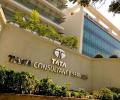
The IT major will give an anniversary hike for lateral hires as they complete a year at the company. And, these employees were entitled to the annual salary revision that followed the anniversary hikes.

'We're putting a lot of focus on GenAI developers and people who can really do all the architecture and programming.'

Equity investors suffered a massive loss of Rs 31 lakh crore on Tuesday as markets went into a tailspin with the BSE Sensex tumbling nearly 6 per cent as vote counting trends showed the BJP may not have a clear majority in the Lok Sabha polls. Erasing the record-rally of the previous trade, the 30-share BSE Sensex cracked 4,389.73 points or 5.74 per cent to settle at 72,079.05. During the day, the benchmark tanked 6,234.35 points or 8.15 per cent to hit a nearly five-month low of 70,234.43.
Bajaj Finserv was the biggest gainer in the Sensex pack, rising 2.21 per cent, followed by Titan, ITC, Kotak Mahindra Bank, HDFC Bank, HDFC, Bajaj Finance, IndusInd Bank, ICICI Bank, HUL, Reliance Industries and Mahindra & Mahindra. Wipro, Tata Consultancy Services, Power Grid and Tech Mahindra were the laggards.

Ask rediffGURU and PF expert Nitin Narkhede your mutual fund and personal finance-related questions.

Having missed most of the first three industrial revolutions, India has its chance to lead the fourth industrial revolution through a convergence of its IT prowess, ultra-high-speed internet connectivity and affordable smart devices, billionaire Mukesh Ambani said on Thursday. The richest Indian, who heads the nation's most valuable company Reliance Industries, said his group's telecom and digital unit Jio was conceived to provide the key ingredients needed to lead the fourth industrial revolution.

Macroeconomic data announcements, global factors and trading activity of foreign investors would be the key triggers for the domestic stock markets this week, analysts said. Last week, the benchmark indices joined the broader market's party despite a host of negative global cues. In the broader market, the BSE midcap and smallcap gauges hit their all-time highs on Friday.

Selling in index heavyweights, including Infosys, TCS, ICICI Bank and Reliance Industries, dragged the benchmark indices into the negative for the second straight session, analysts said. Among the Sensex shares, Asian Paints fell the most by 3.9 per cent as analysts expressed concerns over rising competition in the domestic paints market following the entry of Aditya Birla group company Grasim Industries into the paints segment. IT shares Infosys, TCS, HCL Tech, Wipro and Tech Mahindra continued to slide amid inflation concerns in the US market.

Mumbai, home to 1 crore voters and 420 candidates vying for 36 assembly seats, is gearing up for the Maharashtra Assembly elections on November 20. The Brihanmumbai Municipal Corporation (BMC) has completed all preparations for smooth conduct of the polls, ensuring a robust security arrangement and dedicated facilities for senior citizens and differently-abled voters. The BMC has also urged citizens to exercise their franchise, emphasizing the importance of active participation in strengthening democracy.

State-owned Life Insurance Corporation (LIC) announced on Monday that it had signed up tech giant Infosys to develop a next-generation digital platform that will act as the foundation for new high-value business applications, such as customer and sales super apps, portals, and digital branches. The financial terms of the deal remain undisclosed. The tie-up with Infosys is part of LIC's "long-drawn" strategy, said a senior executive of India's biggest insurer, who noted that the IT giant "won the bid to develop the next-generation platform through a request for proposal (RFP) process".

The number of companies with great reputation falls from 16 to 6 over past 2 years in the United States according to a Harris Interactive study. Auto and financial services industries show strong growth.

From the Sensex pack, IndusInd Bank, NTPC, Asian Paints, Hindustan Unilever, JSW Steel, Tech Mahindra, Bajaj Finance, Infosys, Wipro, ICICI Bank, Bajaj Finserv, HDFC Bank and Tata Motors were among the major laggards. HCL Technologies, Power Grid, Titan, Reliance Industries, UltraTech Cement, Tata Steel, State Bank of India and Mahindra & Mahindra were the gainers.

The number of monthly fresh formal hirings saw a slowdown in August, signalling a downturn in the formal labour market. In August, the number of new monthly subscribers under the Employees' Provident Fund (EPF) decreased by nearly 11 per cent to 930,000. This is a four-month low from 1.05 million in July, according to the latest monthly payroll data released by the Employees' Provident Fund Organisation (EPFO) on Sunday.
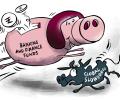
Invest only if you wish to go overweight on the sector.
Tech Mahindra was the biggest loser in the Sensex pack, slipping 4.59 per cent, followed by Asian Paints, Wipro, Kotak Mahindra Bank, Bajaj Finserv, Infosys, ITC, Mahindra & Mahindra, Hindustan Unilever, IndusInd Bank, Reliance Industries and JSW Steel. In contrast, Larsen & Toubro, Bharti Airtel, Power Grid and Axis Bank were among the gainers.

'Our preference remains for the less-expensive industrial stocks, which are showing good earnings momentum.'

Investors' wealth soared by Rs 10.58 lakh crore in three days of the market rally, where the BSE benchmark jumped over 2 per cent, and hit an all-time high on Monday. Extending its winning momentum to the third day running, the 30-share BSE Sensex jumped 363.20 points or 0.49 per cent to settle at 74,014.55. During the day, it zoomed 603.27 points or 0.81 per cent to hit its record high of 74,254.62.

Among the Sensex firms, Nestle rose the most by 4.66 per cent. NTPC rose by 2.16 per cent, Reliance Industries by 1.53 per cent, State Bank of India by 1.04 per cent and Hindustan Unilever by 1.03 per cent. ITC, Power Grid and Bajaj Finance were the major gainers. Wipro, Tata Consultancy Services, HCL Technologies, Tata Steel, Bajaj Finserv and Maruti were among the laggards.

'The customer is fast changing, and she demands newer experiences that wealth can buy.'

The government has revised gold import data, bringing down numbers for November by $5 billion to $9.84 billion, possibly to rectify double accounting of inbound shipments. According to revised data of the commerce ministry arm Directorate General of Commercial Intelligence and Statistics (DGCIS), gold import numbers have been slashed since April 2024, revealing excess imports of about $11.7 billion during the first eight months of 2024-25.

IL&FS group has discharged debt of Rs 38,082 crore to its creditors as of September 30, 2024, according to the latest status report affidavit filed by the debt-ridden firm before insolvency appellate tribunal NCLAT. "As on September 30, 2024, the total debt discharged to creditors of the Respondent No 1 (IL&FS) Group aggregates to Rs 38,082 crore," the status report said. This includes Rs 20,289 crore from monetisation of assets, Rs 8,140 crore from auto-debits, green entity principal servicing, NFB release and Rs 9,653 crore from interim distribution.

She pocketed Rs 9.12 crore as remuneration in FY16

The post-Covid pandemic boom in corporate revenues appeared to have faded away in 2023-24. Yet, companies have reported a sharp recovery in their profits in FY24, driven by high margins. Their combined net sales, including gross interest income for lenders, rose by a modest 4.8 per cent year-on-year (Y-o-Y) in FY24.

Among Sensex shares, HDFC Bank fell the most by 2.58 per cent, followed by SBI (2.12 per cent), HDFC (2.09 per cent), and IndusInd Bank (2.02 per cent). Axis Bank, Bajaj Finserv, M&M, L&T, Reliance, Infosys and TCS were among the major losers. In contrast, Tata Motors, Maruti, NTPC, Sun Pharma, Power Grid and Titan were among the gainers.

Dalal Street investors became richer by Rs 9.68 lakh crore in five days of market rally, where the Sensex breached the historic 73,000-mark for the first time ever to reach a new record peak, taking the market capitalisation of BSE-listed companies to an all-time high of Rs 376 lakh crore. The 30-share BSE Sensex jumped 759.49 points or 1.05 per cent to settle at a new closing high of 73,327.94 on Monday. During the day, it zoomed 833.71 points or 1.14 per cent to reach its all-time peak of 73,402.16.

10 largecaps stocks which stand to gain from the Budget.

The information and technology (IT) sector, which has been going through a rough patch lately, was among the top draws for equity mutual funds (MFs) in July. MF schemes together invested a net of Rs 1,800 crores in IT stocks last month after pulling out around Rs 700 crore from the sector in June, according to a report by ICICI Securities.

A lot depends upon the crucial decision-making skills of the management. If you have any doubts about the management then you always have the choice of selling your shares or not buying stocks of those companies at all.

'The long-term impact of elections is minimal.'

From the Sensex basket, Tata Consultancy Services, Nestle, Bajaj Finserv, Wipro, Maruti Suzuki India, Reliance Industries, Larsen & Toubro and NTPC were the major laggards. Tata Steel, Bajaj Finance, JSW Steel and Bharti Airtel were among the gainers.

'We have to plan for whatever the new normal is.'

The project is supported by the Department of Jobs through IDA Ireland.
